Story
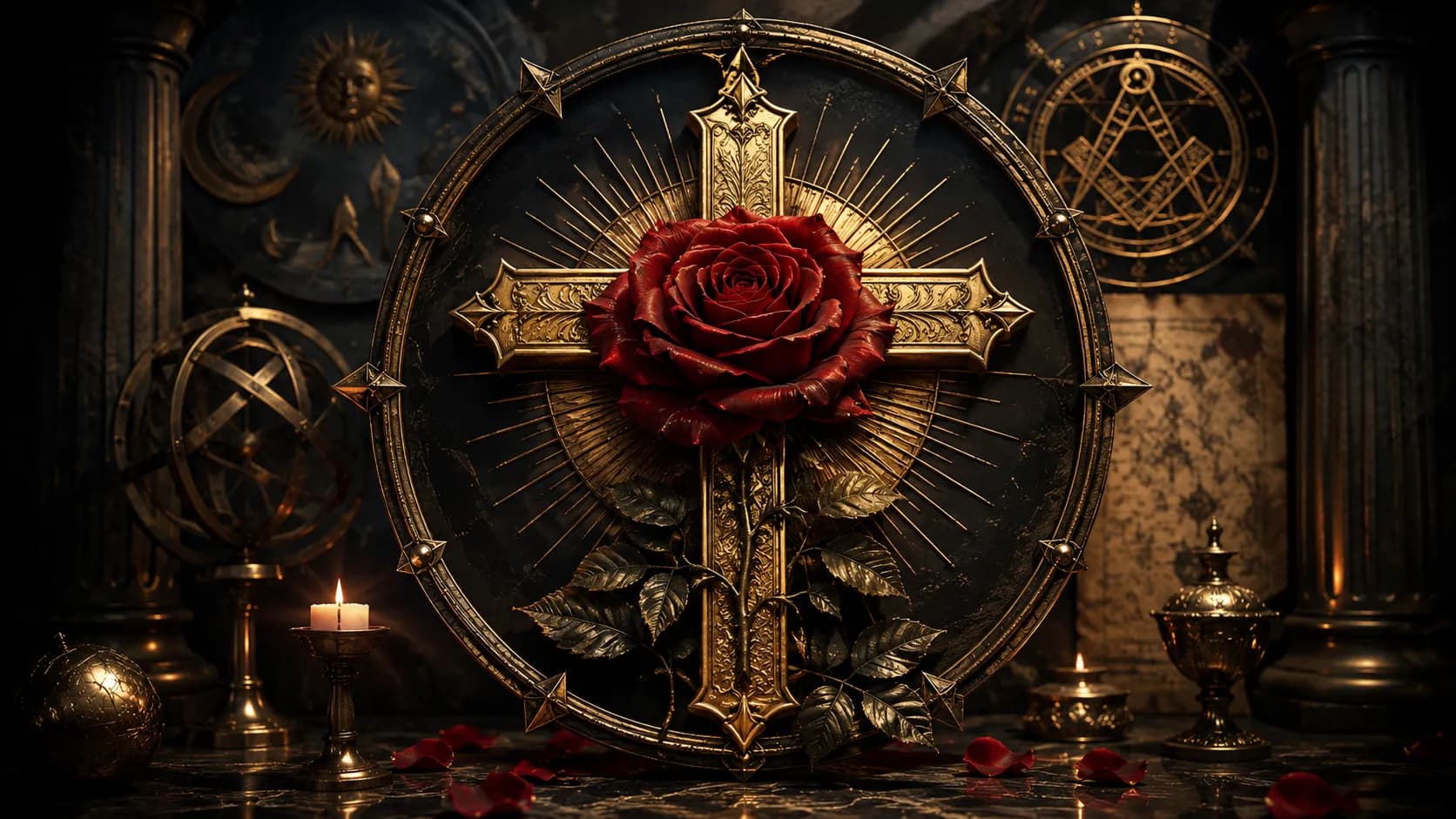
The Rosicrucians are one of the most famous esoteric societies in Western history. They first appeared publicly in the early 17th century through a series of anonymous manifestos published in Germany, claiming access to secret knowledge capable of transforming humanity.
According to legend, the order was founded by Christian Rosenkreuz, a mysterious scholar who traveled through the Middle East to acquire occult, scientific, and spiritual wisdom before returning to Europe to share his teachings.
The Rosicrucian manifestos describe a hidden brotherhood of enlightened individuals working discreetly to improve the world through knowledge, philosophy, and spirituality.
Over the centuries, numerous organizations have claimed to be heirs of the Rosicrucian tradition. Some focus on alchemy, others on mysticism, meditation, or the study of universal laws.
Conspiracy theories often connect the Rosicrucians to other influential secret societies such as the Freemasons, the Knights Templar, or the Illuminati. Some believe the order still exerts hidden influence over politics, science, and culture.
However, historians generally view the original Rosicrucian texts as symbolic and philosophical works intended to encourage spiritual and intellectual reform.
Despite this, the Rosicrucians remain surrounded by mystery and continue to fascinate enthusiasts of esotericism, symbolism, and secret societies.
Credits and origin
The Rosicrucians officially emerged between 1614 and 1616 with the publication of three famous manifestos: the Fama Fraternitatis, the Confessio Fraternitatis, and The Chymical Wedding of Christian Rosenkreuz.
These texts achieved widespread popularity throughout Europe and quickly sparked debate, controversy, and speculation regarding the true existence of the brotherhood.
Over time, Rosicrucianism influenced many Western esoteric, mystical, and philosophical movements.
Main inspirations:
• Christian Rosenkreuz
• Alchemy
• Hermeticism
• Christian mysticism
• Esoteric symbolism
• Spiritual reform
Origin: Germany (17th Century)
Type: Esoteric Society
Legendary Founder: Christian Rosenkreuz
Main Symbol: The Rose and the Cross
Popularity Level: Very High
Popularization: Esoteric literature, occultism, initiatory societies, and the internet