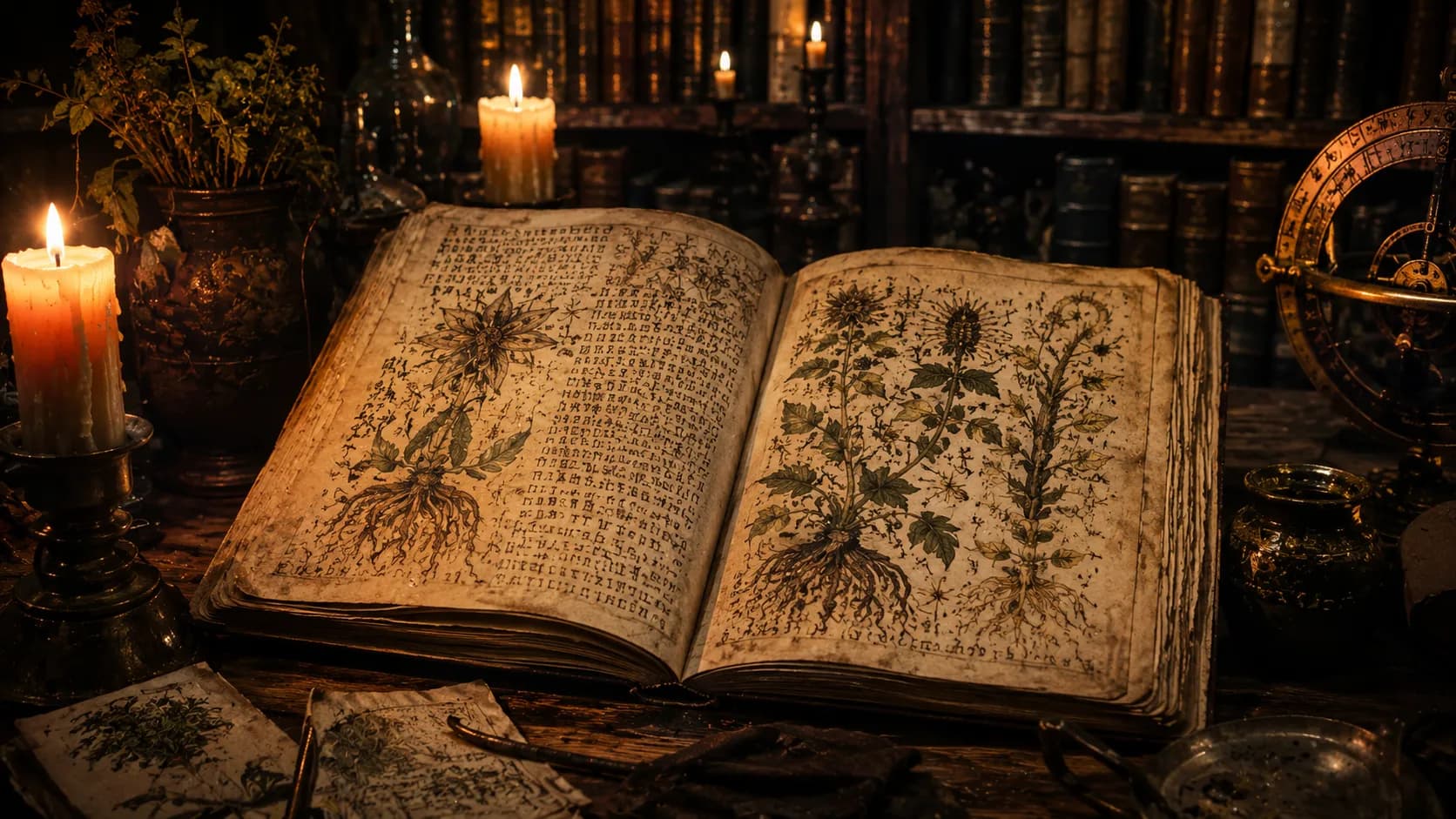
Story
The Voynich Manuscript is one of the most enigmatic documents in history.
This illustrated book is written in an unknown language or script that has resisted decipherment for more than a century.
Carbon dating places the manuscript in the early fifteenth century.
Its pages are filled with incomprehensible text, strange plants, astronomical diagrams, and scenes depicting figures interacting with complex structures.
Botanical illustrations occupy a significant portion of the manuscript.
However, most of the depicted plants do not correspond to any known species, fueling speculation regarding its origin and purpose.
Numerous cryptographers, linguists, historians, and intelligence agencies have attempted to decipher the text without success.
Even experts responsible for breaking military codes during the World Wars failed to determine its meaning.
Some theories suggest it is a medical treatise, an alchemical work, an esoteric text, or an extremely sophisticated cipher.
Others argue that it may be an elaborate hoax.
To this day, the Voynich Manuscript remains one of history's greatest unsolved mysteries.
Credits and origin
The Voynich Manuscript is often regarded as the most mysterious book in the world.
Its unknown writing system, bizarre illustrations, and lack of any reliable translation continue to fascinate researchers and mystery enthusiasts alike.
Main inspirations:
• Cryptography
• Medieval manuscripts
• Alchemy
• Mysterious botany
• Unknown languages
Origin: Medieval Europe
Period: Early 15th century
Modern Discovery: 1912
Name: Voynich Manuscript
Type: Undeciphered illustrated manuscript
Mystery: Unknown language and author
Preservation: Yale University's Beinecke Library
Popularization: Documentaries, historical works, and mystery theories