Story
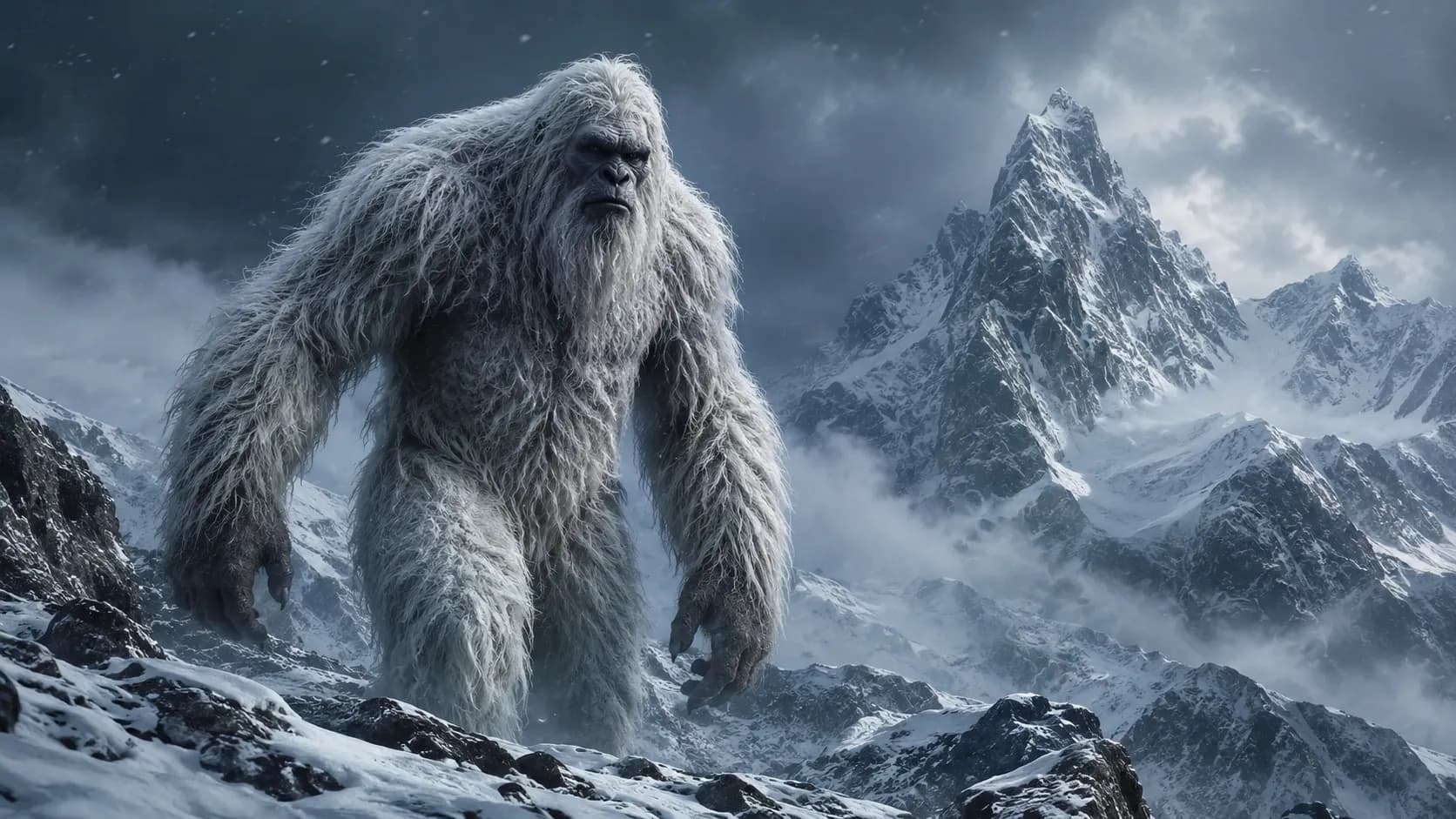
The Yeti, often nicknamed the "Abominable Snowman," is one of the most famous legendary creatures in the world. According to tradition, it inhabits the remote snowy regions of the Himalayas, between Nepal, Tibet, and Bhutan.
Witnesses generally describe a massive humanoid covered in thick white, gray, or brown fur. Standing between two and three meters tall, it is said to move effortlessly across some of the harshest mountain environments on Earth.
For centuries, Himalayan communities have shared stories of wild beings living far from civilization. Giant footprints discovered in the snow have often been presented as evidence of the creature's existence.
During the 20th century, several expeditions by Western explorers helped popularize the Yeti legend. Photographs of mysterious tracks captured worldwide attention and fueled debates about the possibility of an undiscovered primate.
Despite the lack of definitive scientific proof, the Yeti remains one of the most fascinating cryptids. Some believe it could be an unknown animal species, while others see it as a symbol of the mysteries still hidden within Earth's most remote regions.
Today, the Yeti continues to inspire documentaries, films, novels, and expeditions throughout the Himalayas.
Credits and origin
The Yeti myth originates from the traditions of Himalayan peoples, particularly in Nepal and Tibet. Numerous ancient stories describe humanoid beings living high within the snowy mountains.
The term "Abominable Snowman" became popular during the early 20th century after reports from Western explorers who discovered strange footprints in the snow.
Over the decades, many expeditions have attempted to prove the creature's existence, though none have produced definitive evidence.
Main inspirations:
• Himalayan folklore
• Tibetan and Nepalese traditions
• Mysterious footprints in the snow
• Unknown primates
• High-altitude expeditions
• Cryptozoological mysteries
Origin: Himalayas
Type: Humanoid cryptid
Main power: Adaptation to extreme environments
Legendary habitat: Himalayan mountains
Danger level: Low to moderate according to reports
Popularization: Exploration, documentaries, literature, and cinema