Story
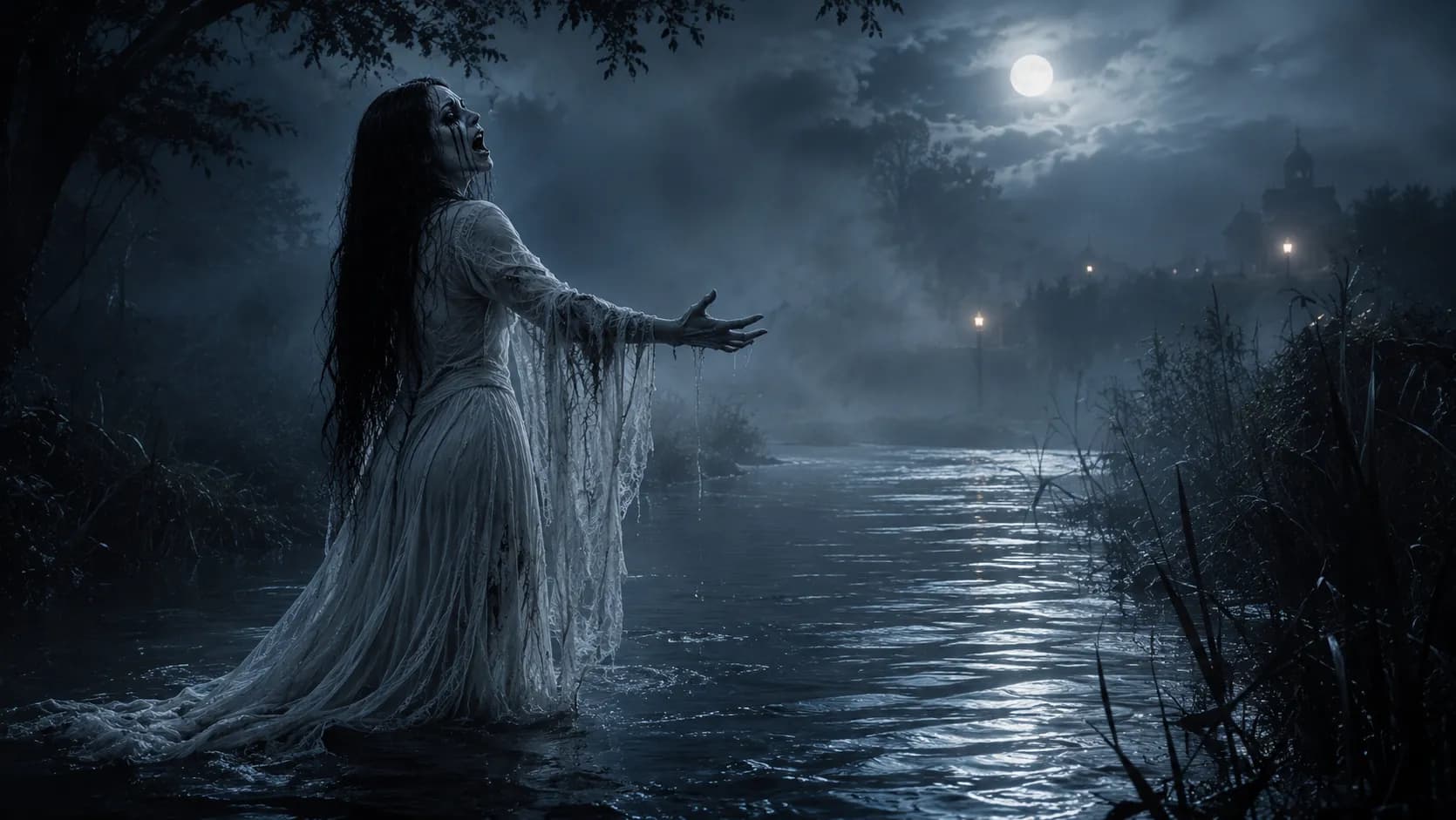
La Llorona, or "The Weeping Woman," is one of the most famous legends in Latin America. Her story has been told for centuries throughout Mexico and many Spanish-speaking countries.
According to the most common version of the legend, La Llorona was a beautiful woman who, in a moment of despair or madness, drowned her own children in a river. Realizing the horror of her actions, she was condemned to wander forever searching for them.
Witnesses claim to hear her heartbreaking cries echoing near rivers, lakes, and isolated places during the night. Her most famous cry is: "¡Ay, mis hijos!" ("Oh, my children!").
Stories typically describe La Llorona as a woman dressed in a long white gown, sometimes surrounded by supernatural mist. Her face is often hidden, distorted, or completely absent depending on the version.
In many tales, encountering La Llorona is considered a bad omen. Some believe she is searching for her lost children, while others claim she tries to lure careless travelers toward dark waters.
Over time, the legend has become a cornerstone of Latin American folklore and continues to inspire films, novels, television series, and modern horror stories.
Credits and origin
The legend of La Llorona originates in Mexican and pre-Columbian folklore. Some versions connect her story to ancient Aztec beliefs involving female spirits who foretold misfortune.
Over the centuries, the tale spread throughout Latin America, giving rise to numerous local variations.
La Llorona is often used as a cautionary tale warning children about the dangers of wandering at night, approaching rivers, or entering isolated places.
Main inspirations:
• Mexican folklore
• Aztec mythology
• Wandering female spirits
• Ghost stories
• Family tragedies
• Haunted river legends
Origin: Mexico
Type: Legendary spirit
Main power: Supernatural apparitions and ominous warnings
Legendary habitat: Rivers, lakes, and isolated areas
Danger level: Moderate to high according to legends
Popularization: Latin American folklore, horror cinema, literature, and popular culture