Story
The Chupacabra is one of the most famous and controversial cryptids in modern history. Its name literally means "goat sucker," referring to the many livestock attacks attributed to the creature.
The first modern reports emerged in Puerto Rico during the 1990s. Farmers reported finding dead animals with unusual wounds, often described as small puncture marks around the neck or chest.
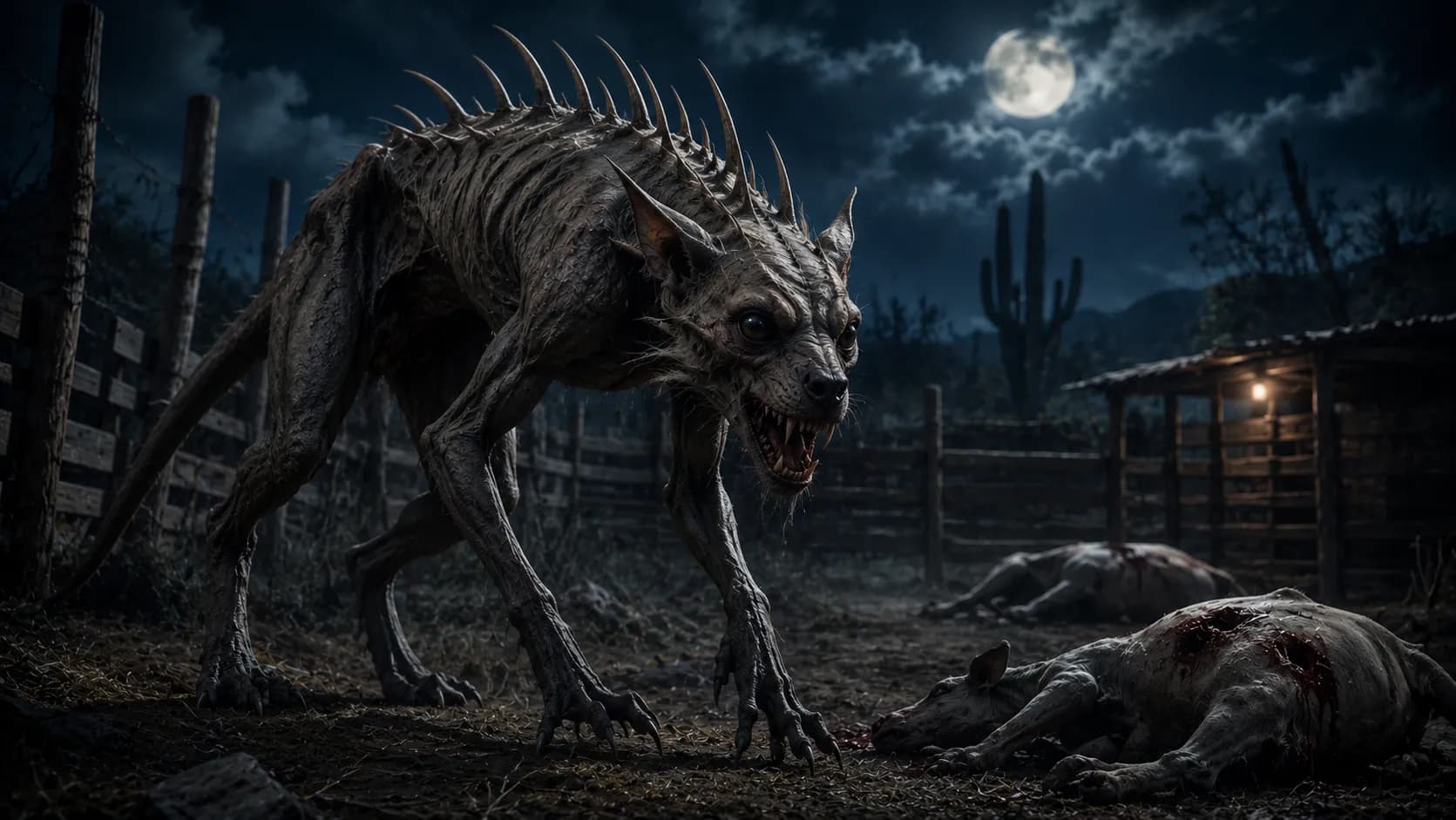
Descriptions of the Chupacabra vary greatly. Some witnesses describe a reptilian biped with spines running down its back, while others report a hairless canine-like creature with glowing eyes.
The most popular stories claim that the creature silently attacks farms at night before disappearing without a trace. This reputation as an elusive predator quickly helped build its legend.
Over the years, several carcasses claimed to be Chupacabras were identified as coyotes or dogs suffering from severe skin diseases. Nevertheless, many paranormal enthusiasts continue to believe that an unknown species may exist.
Today, the Chupacabra remains an iconic figure of cryptozoology and modern folklore, appearing in countless documentaries, books, television series, and video games.
Credits and origin
The Chupacabra first emerged in modern Puerto Rican folklore during the mid-1990s before spreading throughout Latin America and parts of the United States.
The legend grew from reports by farmers who claimed to find livestock drained of blood after unexplained nighttime attacks.
Although scientific investigations have often identified ordinary predators as the cause of such incidents, the Chupacabra myth continues to captivate the public imagination.
Main inspirations:
• Latin American folklore
• Mysterious livestock attacks
• Modern cryptozoology
• Unknown predators
• Paranormal theories
• Farmer testimonies
Origin: Puerto Rico
Type: Cryptid
Main power: Elusive nocturnal predator
Legendary habitat: Rural regions of Latin America
Danger level: Moderate to high according to reports
Popularization: Media, cryptozoology, documentaries, and popular culture