Story
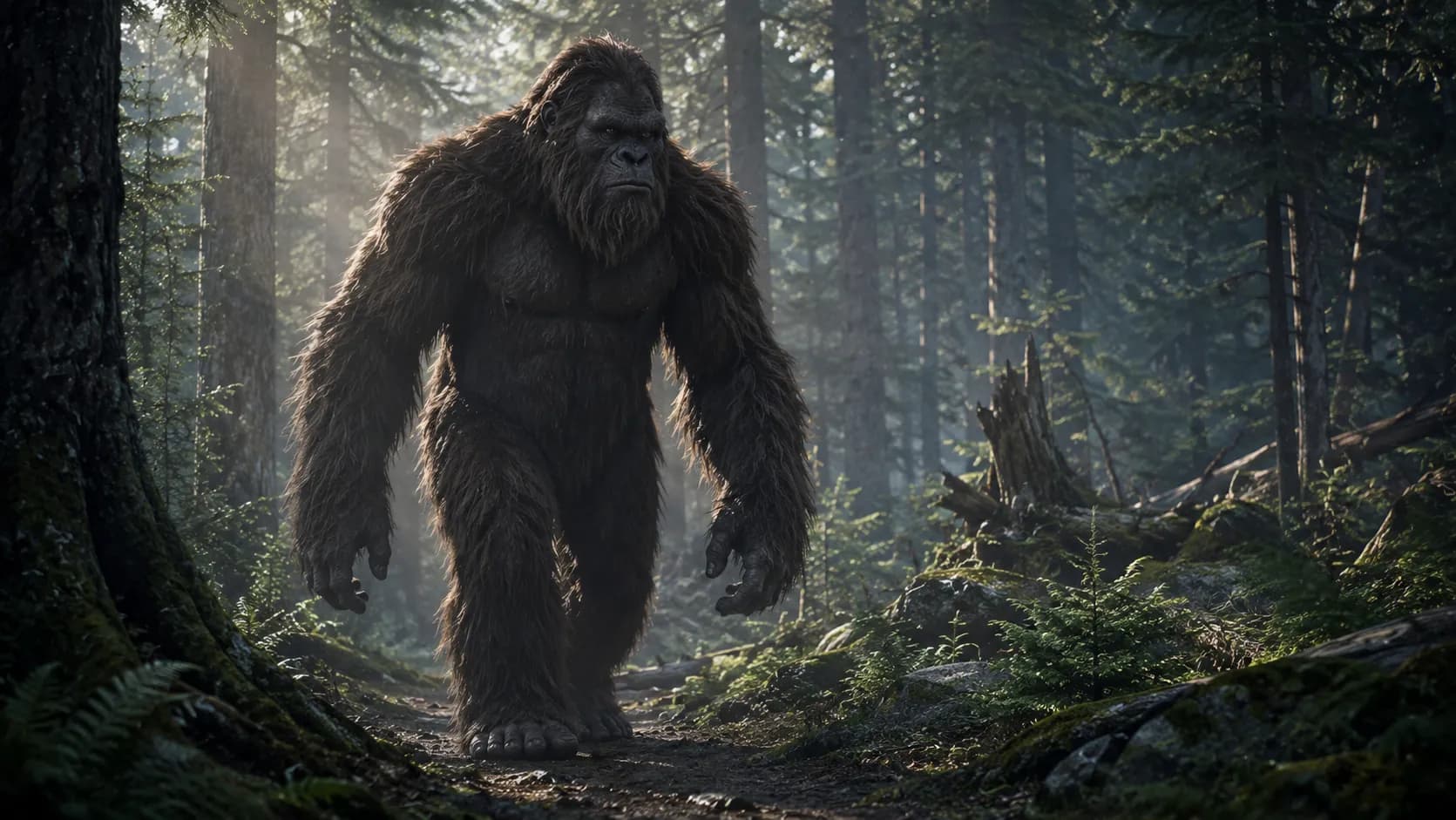
Bigfoot, also known as Sasquatch, is one of the most famous cryptids in modern history. Described as a giant hairy humanoid, it has reportedly been sighted for centuries throughout the wilderness of North America.
Witnesses generally describe a creature standing between two and three meters tall, possessing incredible strength and a powerful build. Its body is said to be covered in thick brown or black fur that allows it to blend into forest environments.
Many people claim to have seen Bigfoot crossing remote roads or disappearing into dense forests, often leaving behind enormous footprints. These tracks remain one of the most iconic pieces of evidence associated with the creature.
The most famous sighting remains the Patterson-Gimlin film recorded in California in 1967, showing a large humanoid figure walking through a forest. Despite decades of analysis, debate over its authenticity continues to this day.
Some researchers speculate that Bigfoot could be an undiscovered species of primate, while others believe the phenomenon results from folklore, misidentifications, and hoaxes.
Whether real or mythical, Bigfoot remains one of the greatest mysteries of modern folklore and continues to inspire investigations, documentaries, and expeditions around the world.
Credits and origin
The Bigfoot legend originates from the traditions of many Indigenous peoples of North America. Long before European settlers arrived, numerous tribes told stories about wild giant beings living deep within forests and mountains.
The term "Sasquatch" comes from the word "Sásq'ets," used by Indigenous peoples of Canada's Pacific Northwest.
During the 20th century, modern Bigfoot reports multiplied through eyewitness accounts, footprint casts, photographs, and media coverage.
Main inspirations:
• Native American folklore
• Unknown great apes
• Wild forest creatures
• Eyewitness reports
• Mysterious footprints
• Modern zoological mysteries
Origin: North American folklore
Type: Humanoid cryptid
Main power: Exceptional stealth and immense strength
Legendary habitat: Forests and mountains of North America
Danger level: Low to moderate according to reports
Popularization: Documentaries, cryptozoological investigations, cinema, and popular culture