Story
Baba Yaga is one of the most famous and mysterious figures in Slavic folklore. Appearing in countless Russian, Ukrainian, Belarusian, and Eastern European tales, she is often portrayed as an ancient witch possessing immense supernatural powers.
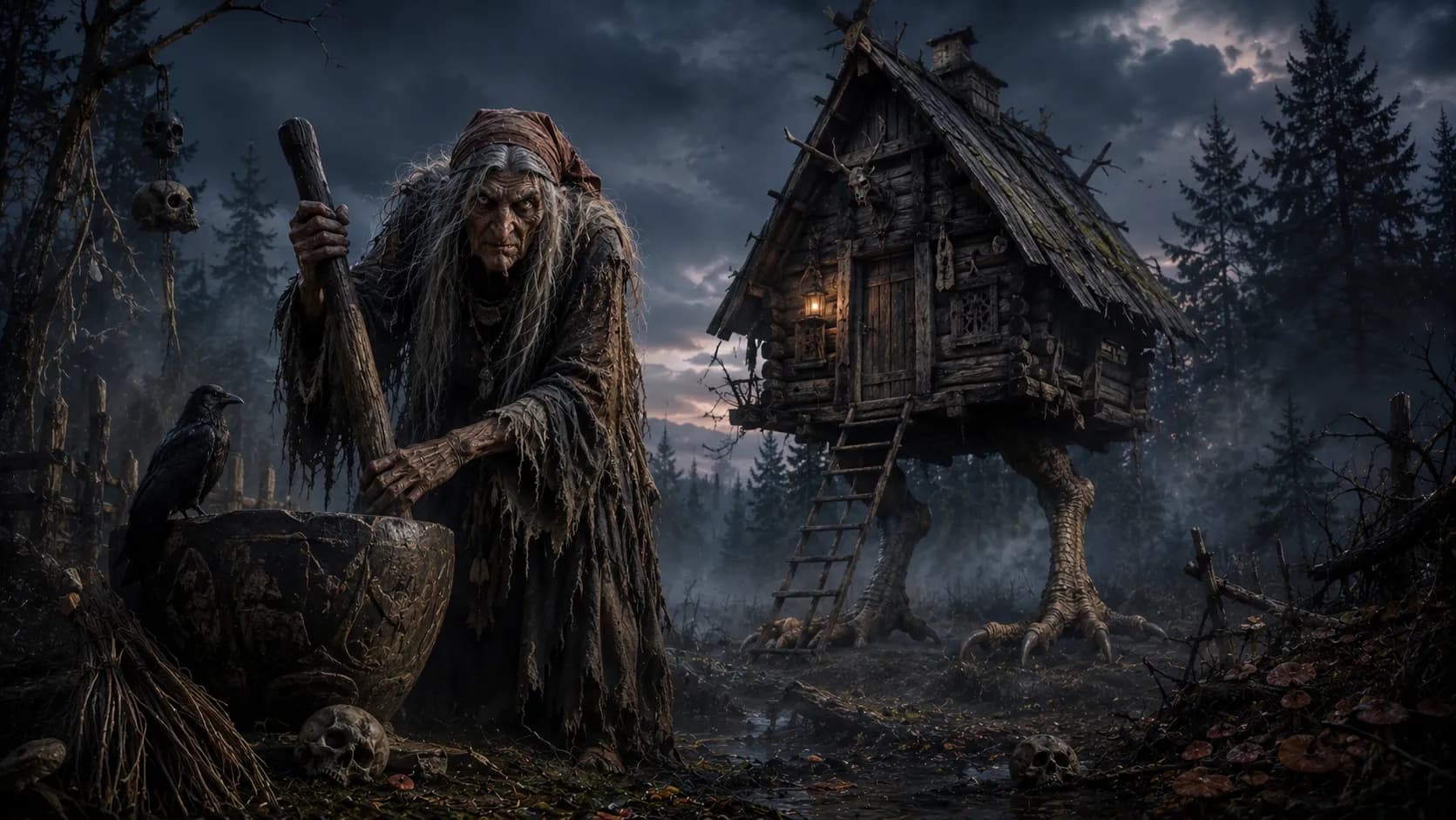
She is said to live in a strange hut standing on enormous chicken legs, capable of moving through the forest. According to legend, the hut spins on itself and only opens its door to those who know the proper magical phrase.
Baba Yaga is typically depicted as a thin old woman with a terrifying face, a hooked nose, and iron teeth. She travels in a giant mortar propelled by a pestle while sweeping away her tracks with a broom.
Unlike traditional witches, Baba Yaga is neither completely evil nor entirely benevolent. In some stories, she devours careless travelers and lost children. In others, she helps worthy heroes by providing magical objects, wisdom, or difficult trials.
Her vast knowledge of nature, magic, and fate makes her both feared and respected.
Today, Baba Yaga remains one of the most iconic characters in European folklore and continues to inspire films, novels, video games, and fantasy works worldwide.
Credits and origin
Baba Yaga originates from ancient Slavic traditions dating back centuries before the modern era. Researchers believe she may have evolved from pagan deities associated with nature, death, and wisdom.
Her image gradually developed into one of the central figures of Eastern European folk tales.
The famous chicken-legged hut and her dual role as both protector and threat have made Baba Yaga a unique figure in world folklore.
Main inspirations:
• Slavic mythology
• Ancient pagan beliefs
• Witchcraft and magic
• Mysterious forests
• Nature spirits
• Eastern European folk tales
Origin: Slavic folklore
Type: Legendary witch
Main power: Ancient magic and supernatural knowledge
Legendary habitat: Deep forests of Eastern Europe
Danger level: High but unpredictable
Popularization: Slavic tales, literature, cinema, video games, and popular culture