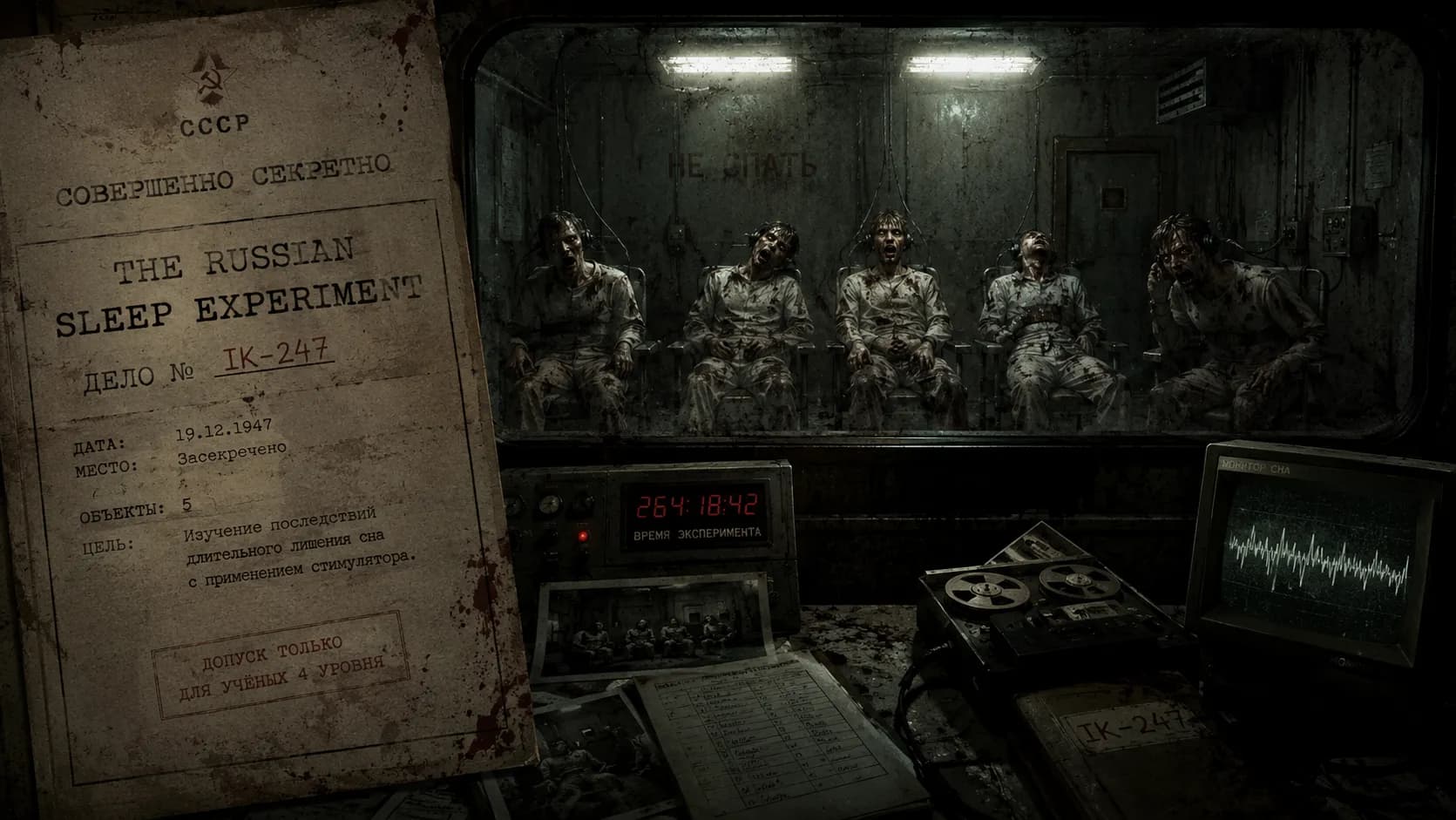
Story
The Russian Sleep Experiment is one of the most famous creepypastas in internet history. The story claims to describe a secret Soviet experiment conducted in the late 1940s.
According to the tale, five political prisoners were locked inside a sealed chamber and exposed to an experimental gas designed to prevent sleep. In exchange for participating, they were promised their freedom.
During the first few days, the subjects appear normal. However, after several nights without sleep, their mental condition begins to deteriorate rapidly. Conversations become paranoid, behavior turns erratic, and fear spreads among the researchers.
As the experiment continues, the prisoners descend into extreme madness. Some refuse to leave the chamber despite their horrific condition. Others develop an obsessive desire to remain awake at all costs.
The most disturbing versions of the story claim that the subjects mutilated themselves, lost all sense of humanity, and developed an abnormal resistance to pain.
The ending is particularly famous: when asked why they refuse to sleep, one survivor allegedly explains that they represent what lies hidden within every human being once all mental restraints are removed.
Although entirely fictional, the story became one of the world's most famous creepypastas due to its apparent realism and deeply unsettling atmosphere.
Credits and origin
The Russian Sleep Experiment first appeared online in the late 2000s. The original author is generally credited to a contributor on Creepypasta.com.
The story quickly gained popularity due to its realistic presentation as a scientific or military report.
Many readers initially believed the story was true, helping it spread virally across the internet.
Main inspirations:
• Secret human experiments
• Cold War history
• Soviet Union
• Sleep deprivation
• Psychological horror
• Conspiracy theories
Origin: Internet (2009)
Type: Creepypasta
Main power: Psychological horror and realism
Primary theme: Fictional scientific experiment
Danger level: High within the story
Popularization: Forums, YouTube, podcasts, and internet culture