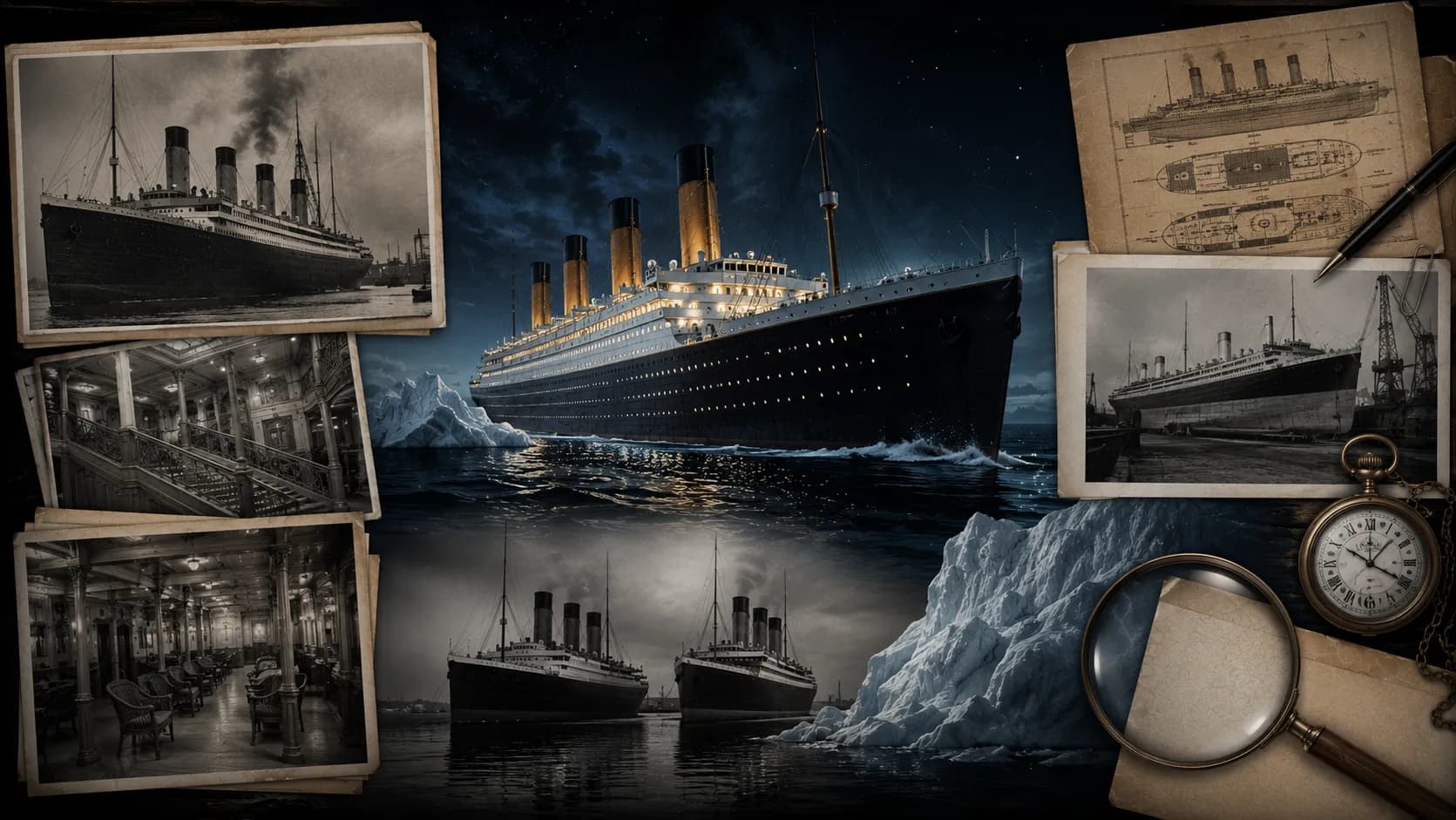
Story
The "Titanic Switch" theory is one of the most famous maritime conspiracy theories in modern history.
According to this hypothesis, the ship that sank in the North Atlantic during its maiden voyage on April 15, 1912, was not actually the RMS Titanic but its sister ship, the RMS Olympic.
Supporters of the theory claim that the Olympic suffered severe damage during a collision with HMS Hawke in 1911. They argue that repairs were too expensive and that the White Star Line secretly swapped the identities of the two vessels.
In this version of events, the damaged Olympic was renamed Titanic before the voyage. Its sinking would then have allowed the company to collect a large insurance payout.
Advocates of the theory often point to alleged inconsistencies in historical photographs, interior design features, and component serial numbers that they believe do not match the official Titanic records.
However, historians and maritime experts generally consider the theory highly unlikely. Both ships were observed by hundreds of workers, engineers, sailors, and passengers, making such a large-scale deception extremely difficult to conceal.
Furthermore, explorations of the Titanic wreck since its discovery in 1985 have identified numerous features clearly matching the original Titanic built by Harland & Wolff.
Despite this, the Titanic Switch theory continues to fascinate mystery enthusiasts and remains one of the most popular alternative explanations surrounding the Titanic disaster.
Credits and origin
The Titanic Switch theory emerged primarily during the late 20th century and gained popularity through documentaries, books, and the internet.
It is based on the idea that an insurance fraud scheme may have been organized by the White Star Line to recover losses associated with the Olympic.
The discovery of the Titanic wreck in 1985 and subsequent expeditions provided opportunities to examine many of the technical details used in these debates.
Main inspirations:
• Titanic disaster
• RMS Olympic
• Insurance fraud
• Maritime history
• Historical conspiracy theories
• 20th-century mysteries
Origin: Late 20th Century
Type: Historical Conspiracy Theory
Main topic: Titanic disaster
Related event: Sinking of the Titanic (1912)
Popularity level: Very high
Popularization: Books, documentaries, television, and the internet